
The United Nations Security Council, under India's presidency, has imposed global sanctions against the dreaded Pakistan-based Haqqani militant network and the group's chief of suicide operations.
Pakistan continues to tolerate and abet the insurgency in Afghanistan, particularly the Haqqani terror network, as it aims for a Pak-friendly government in Kabul with limited Indian influence, the United States said on Friday in a key report prepared for the American Congress.
In a move that could have determining effect on the 'war on terror' in Afghanistan, the new American military commander in Afghanistan, General David Petraeus has suggested putting the dreaded Haqqani group in the list of banned terror groups.

Pakistan is not putting enough pressure on the Haqqani terror network and this is the reason that the United States Defence Secretary not giving the necessary certification for release of $300 million in coalition support funds to it, a top American general has said.
Pakistan-based Haqqani network is a deadly terrorist outfit, which is responsible for more than 90 percent of the civilian casualties in eastern part of Afghanistan, a top US military official based in this part of the war-torn country believes.
The war of words between Pakistan and the United States on the Inter-Services Intelligence's alleged links with the Haqqani terror network escalated on Friday with Pakistan Army chief Gen Ashfaq Parvez Kayani describing US military chief Admiral Mike Mullen's accusations as "not based on facts".

The United States conducted retaliatory strikes against Iran, targeting over 80 sites, after accusing Tehran of attacking commercial vessels in the Strait of Hormuz, while Iran condemned the US decision to revoke a temporary suspension of sanctions on Iranian oil sales.

As a proxy of Pakistan's ISI, Sirajuddin is believed to be behind several attacks directed against India, including the murderous attack on the Indian embassy in Kabul in 2008 and the 2013 attack close to the Indian consulate in Jalalabad.

One of the most dreaded terrorists in the world is now a member of the Taliban cabinet.

Abdul Aziz Haqqani, a top leader of Pakistan-based dreaded Haqqani network, has been named 'Specially Designated Global Terrorist' by the United States for his involvement in planning and carrying out attacks against Afghanistan.
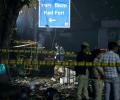
A UN Security Council report indicates that Pakistan-based Jaish-e-Mohammed (JeM) was reportedly linked to a terror attack on the Red Fort in New Delhi. The report also highlights JeM's activities, including the establishment of a women-only wing and its presence in the region.
The United States will not slap the "terror" label on the Haqqani Network for the safe exit of its troops from Afghanistan, a senior Pakistan diplomat has said.
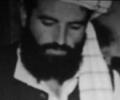
The son of the chief of the Haqqani terror network, blamed for attacks on US forces and the Indian Embassy in Kabul, was shot dead by unidentified gunmen near the Pakistani capital, leaders of the group said on Monday

Noted American experts and analysts argue that Foreign Terrorist Organisation designation of the Haqqani Network is meaningless unless Pakistan's intelligence agency is reined it. Aziz Haniffa reports
Pakistan's Interior Minister Rehman Malik has contended that the United States should share the blame for the rise of the Haqqani network as the Central Investigation Agency created the Taliban faction during the Soviet occupation of Afghanistan and trained its members.
Gretchen Peters, of the United States Military Academy at West Point's Combating Terrorism Center, who has since 2005, spent considerable time studying the link between organised crime and insurgencies in Afghanistan and Pakistan, has told US Congress of the nexus between the criminal enterprise Dawood Ibrahim company, the Haqqani Network and the Inter-Services Intelligence.
Pakistan has ordered a probe into the killing of the eldest son of the chief of the dreaded Haqqani network that has been blamed for attacks on the Indian Embassy and American forces in Afghanistan, a report said on Friday.=
The United States on Tuesday designated a top Pakistan-based Haqqani network commander, Mali Khan, as a foreign terrorist and slapped financial sanctions against him, aimed at crippling the finances to the dreaded outfit.
The Pakistan-based Haqqani network is suspected to have carried out the brazen suicide attacks on western embassies and Parliament in Kabul, Afghanistan Interior Minister Bismillah Mohammadi has said.
While some reports say Sirajuddin Haqqani, the operational chief of Haqqani network has recently held a meeting with Afghan president Hamid Karzai in the presence of Pakistani Army chief Ashfaq Kiyani, Kabul-based sources reveal the meeting did not take place.
Only punitive pressure against Pakistan can help in neutralising the Haqqani Network, says senior analyst B Raman
The dreaded Haqqani network has emerged as the 'most ominous threat' to the already fragile US-Pakistan ties as American officials believe the terror group has an 'ongoing relationship' with the ISI and the two were doing more than just talking, a media report has said.
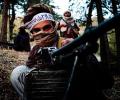
The United States has announced a bounty of $30 million for information leading to the location of five key leaders of the Haqqani militant network, held responsible for several attacks on civilians and NATO forces in Afghanistan.
The United States at this point of time is not in a position to certify that there is no link between the Pakistan's spy agency Inter-Services Intelligence and the dreaded Haqqani network, a senior top American official has said.
United States Secretary of State Hillary Clinton has told her Pakistani counterpart Hina Rabbani Khar to take strong action against terrorist groups particularly Lashkar-e-Tayiba and the Haqqani network, which is blamed for last week's deadly attack on American embassy in Kabul.
If Pakistan decides not to take action against the Haqqani network, the United States would carefully consider how to proceed ahead, a top US official said on Tuesday.
Branded as a "veritable arm" of the Inter-Services Intelligence, the Haqqani network's operational chief Sirajuddin Haqqani has claimed that his group did not kill Burhanuddin Rabbani and denied any links with the Pakistani spy agency.
Badruddin Haqqani, the key operational commander of the Al Qaeda linked Haqqani network, and top Pakistani Taliban commander Mullah Dadullah are believed to have been killed in US drone and air strikes in the tribal region of Pakistan and Afghanistan.
The United States has slapped sanctions on Badruddin Haqqani, a "dangerous" commander of Pakistan-based Haqqani network, in a bid to check the flow of financial and other aid to him, though it said it currently had no plans to designate the Al Qaeda-linked group as a foreign terrorist organisation.
In a severe indictment of Pakistan's links with terror groups, top United States military commander on Thursday said the Inter-Services Intelligence provided support to the Haqqani terror network in carrying out the recent attack on the country's embassy in Kabul.

Former Inter-Services Intelligence chief Ahmed Shuja Pasha has admitted that the deadly Haqqani network was created by it and America's Central Intelligence Agency and claimed that the insurgent group's chief Jalaluddin Haqqani had "in fact been invited to the White House by President (Ronald) Reagan".
The United States on Friday designated Pakistan-based dreaded Haqqani network as a terrorist group, a move that could degrade the organisation's ability to execute violent attacks and pressurise Islamabad to act militarily against the outfit.
After accusing Pakistan's Inter Services Intelligence of supporting the Haqqani terror network, the Obama administration is now relying on the spy agency to help it organise and begin "reconciliation talks" aimed at ending the war in Afghanistan, a media report said in New York.

'TTP has vowed to take revenge for the attacks that Pakistan is carrying out against Afghanistan.' 'To diminish this threat, Pakistan is hitting Afghanistan hard.'

Support for the dreaded Haqqani network across the militant group's historical stronghold in eastern Afghanistan is gradually turning into "resentment" as local leaders say the Haqqani supremo's war is for "Pakistani rupees and power" and they cannot follow him "blindly".

Pakistan Army Chief General Ashfaq Parvez Kayani has rubbished media reports of him organising a secret meeting between Afghan President Hamid Karzai and the Haqqani network commander Sirajuddin Haqqani in Kabul last month.

Pakistan's powerful Inter-Services Intelligence had brought in Haqqani network's chief Sirajuddin Haqqani as the deputy leader of the Taliban last year to protect him from the Americans, a media report said on Sunday.
Is the United States actually serious to proceed against the Haqqanis this time or is it yet another ploy on the part of the Obama administration to pressurise one of the most influential power players in Afghanistan to join hands with the international community to hold future negotiations with the Taliban? Amir Mir tries to find out.
Is the United States actually serious to proceed against the Haqqanis this time or is it yet another ploy on the part of the Obama administration to pressurise one of the most influential power players in Afghanistan to join hands with the international community to hold future negotiations with the Taliban? Amir Mir tries to find out.

The Taliban had promised an 'inclusive' government that represents Afghanistan's complex ethnic makeup, but there is no Hazara member in the cabinet.
